It seems there are many different techniques or methods around these days, that suggest helpful ways for regulating or managing feelings, emotions, pain, and so-called ‘unhelpful thoughts’.
Several of these methods or techniques suggest you be present to what is there, not trying to fix or change, and then maybe something like: feeling your feet, humming, doing something simple and practical, looking around and noticing what you can see, smell, or hear, tapping yourself, or similar.
This can be very helpful, and the ‘being present to’ and being self-compassionate or just observing or ‘witnessing’ what or how you feel, does make a change for many of us. Although, it seems to me that when that is all we do, the things just keep happening and keep coming back, as if something is somehow kept ‘stuck’.
These tecniques or methods seem to underlyingly believe that there is something bad about feeling bad, and that there are certain things that come from inside that are good enough and ‘right’, whereas others are ‘bad’ or as if they should be, well, regulated and managed, rather than related to and seen as having their own kind of importance.
Sometimes I think these techniques might actually be keeping us sidelined, or desensitised from, our living and from our aliveness, and that leads me to Focusing, or Felt Sensing.
So what does Focusing/Felt Sensing add, isn’t it also just an emotion regulation technique? I say no, it isn’t, it is (much) more than that. I will try to describe it below:
One might say that the being present to what is there is one step, in or of Focusing, kind of a start to a process that can lead to actual change. Or in Eugene T. Gendlin’s (discoverer of Focusing) own words:
Every bad feeling is potential energy toward a more right way of being, if you give it space to move toward its rightness.
Eugene T. Gendlin, Focusing (2003 p. 76)
The treasure of the inner, painful nudge
Focusing is based on an understanding that what feels bad, actually is something like a treasure, something like a ‘knowing’ from your living; a knowing of a next possible step in your whole life, rather than just being some disturbing bad feeling that needs to go away so that you can live your life.
Gendlin called what we are looking to allow to form in Focusing, a Felt Sense. If all we do is managing, controlling or regulating our feelings and emotions, we could end up with a denying of life (i.e. change) itself, in this understanding.
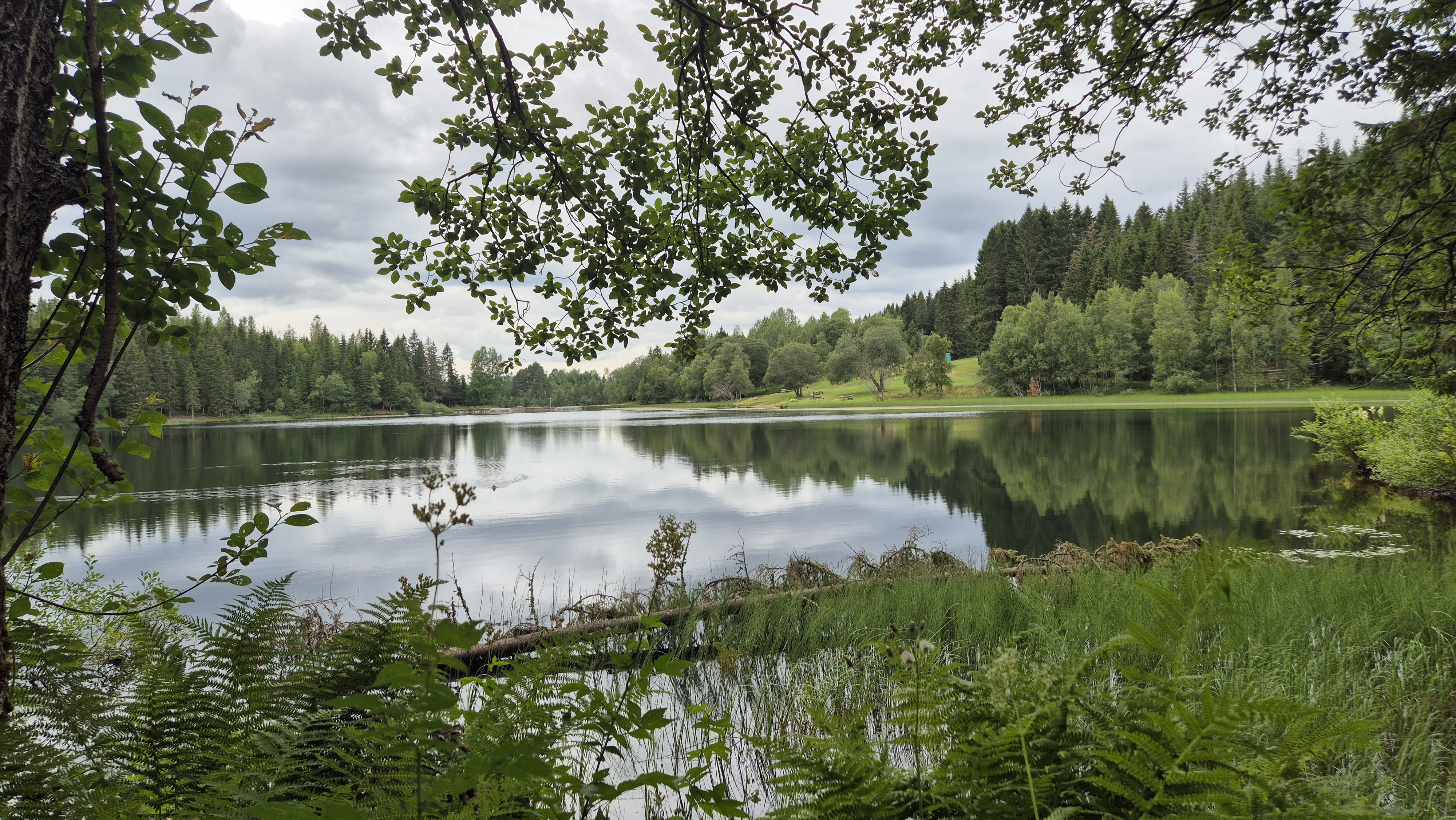
So, as opposed to ‘managing’ whatever comes up or seems to even try to take over, you can turn towards what comes as if it were a creative something nudging you to let you know something completely fresh and new. Something that can offer new insight that can carry your whole life forward. Just as is written in the Swedish poet Karin Boye’s poem:
Yes, of course it hurts when buds are breaking.
Karin Boye, 1935
Why else would the springtime falter?
Why would all our ardent longing
bind itself in frozen, bitter pallor?
After all, the bud was covered all the winter.
What new thing is it that bursts and wears?
Yes, of course it hurts when buds are breaking,
hurts for that which grows
– and that which bars.
Ja visst gör det ont när knoppar brister.
Varför skulle annars våren tveka?
Varför skulle all vår heta längtan
bindas i det frusna bitterbleka?
Höljet var ju knoppen hela vintern.
Vad är det för nytt, som tär och spränger?
Ja visst gör det ont när knoppar brister,
ont för det som växer
_ och det som stänger.
Life moves forward, life is creative, life is change, and you are life
So when life bursts out into bloom, one might imagine it is painful, and that the pain is somehow a sign that something is trying to happen in a new way, just like buds in spring. Maybe it has been nudging and trying for many years, and only now that you know there is something such as Focusing, you might discover what that something trying to happen might become. So what is the next step?
If there is in you something bad, sick, or unsound, let it inwardly be and breathe. That’s the only way it can evolve and change into the form it needs”.
(Eugene T. Gendlin, “Let your body interpret your dreams”, 1986, p.178)
If instead of managing, or trying to fix or control, we take a step to the side and ‘have’ what is there, and not only that, but we ask from ‘inside’, or as Gendlin used to say “downstairs” instead of asking ourselves what we already know, and then wait, what is there can show us what this is about in our whole life.
So, when you find yourself next to what is there, you might find that what you are feeling is actually one situation out of many, in your life. You might discover that this one situation is an instance of something that there are probably more, similar instances If you don’t go into analysis or into the usual story or explanation of this instance and others, as you usually know them, you can instead ask inside, and wait without letting your mind answer, something along the lines of these possible questions:
- “What is this like?” – as if you are checking for a metaphor or some not-so-socially-expected way of describing how it feels in there, sits there, or what it seems to be like in there this moment. And then, when there is some kind of description coming, that seems to resonate with that “it”, we are at the crucial next thing that Focusing/Felt Sensing brings. So you might check:
- “What is this really about, in my (whole) life?“, or “How does this connect to my (whole) life?”, and then allow a fresh feel of your whole life from here start to form from the inside, or you might try checking inside, asking (and again without allowing your mind to do the quick analysis answering) :
- “What makes this so…?” (fill in with what it feels like), and again, wait and see what forms from the inside, something that you do not already know, something that seems to come from somewhere deeper, somewhere that is not your regular ‘thinking’ or ‘understanding’.
What you are doing in this process, is more than just passively being next to a feeling or emotion, you are actively believing and trusting that there is something more there, something creative. It might as yet be quite unclear, it usually is, and probably has to be, because if it seems very clear, it is likely that it is only what it has always been, rather than something fresh growing or budding or coming. We call it a felt sense, and rather than being clearly logical, it feels meaningful from inside, maybe even mysteriously so.
Gendlin says that: “When a felt sense changes, you change – and, therefore, so does your life” (Focusing, 2003, p. 32).
The inner “yes, yes!” or “aha!”
This process needs us to not be too quick, and for what comes to be allowed to seem illogical and weird and metaphorical. The way to know that what comes is ‘right’ or is ‘moving towards its rightness’, is an inner response of “aha!” or “Yes, yes!”, or something like a deeper breath just happens on its own accord, or unexpected tears or inner compassion happens without you making it.
When something has shifted from inside, it is important not to try and analyse for a few hours, just keep that fresh feeling or sense that has come along to just be, breathe and be protected from regular thought. It is likely that you will discover something you hadn’t expected, and that you might find yourself doing something you don’t normally do in the following days, something that feels fresh and intersting and surprising in a nice way.
If this sounds interesting to you and you would like to know more, you can check out the Felt Sensing and With-Sensing (Focusing and listening) Training. In 2026 it starts in February and you can read more about it and find links in this blogpost.
 Grounded Space Focusing